Applications for the 2026 Heritage Revitalization Awards are now open! Submit your nomination by Feb. 5 at 4 p.m.
Heritage Conservation intends to conserve, value and share the places and landscapes, histories, traditions and stories that embody our heritage, now and for future generations. Historic buildings, districts and landscapes provide us with physical reminders of our past and a greater understanding and appreciation of our local identity.
The City of Belleville conserves significant cultural heritage resources to celebrate, revitalize, stabilize and enhance the community as well as to contribute to its physical, social, cultural and economic development.
Take a look at our designated and listed properties:
![]()
The Ontario Heritage Act
Under the Ontario Heritage Act, the City of Belleville designates heritage properties to publicly acknowledge their value to our community. This legislation enables municipalities to protect properties of architectural and historical significance. The act provides the City with ways to recognize and protect properties of cultural heritage value, including:
- Individual designation (Section 29 of the Act)
- Listing on the heritage register (Section 27 of the Act)
- Heritage district designation (Section 41of the Act)
In response to the Act the City of Belleville has assembled a Municipal Heritage Committee to advise City Council on heritage matters.
Designating Heritage Properties
Heritage Designation is a way for an owner to express pride in the heritage nature of the property. A property may be worthy of individual designation if it satisfies one or more of the following criteria established through Ontario Regulation 09/06 under the Ontario Heritage Act.
If you believe your property has heritage value and would like to designate your property, please contact planning@belleville.ca as a first step.
Design or Physical Value
The property has design or physical value because it is a rare, unique or early example of a style, type, expression, material or construction material; displays a high degree of craftsmanship or artistic merit or demonstrates a high degree of technical or scientific achievement.
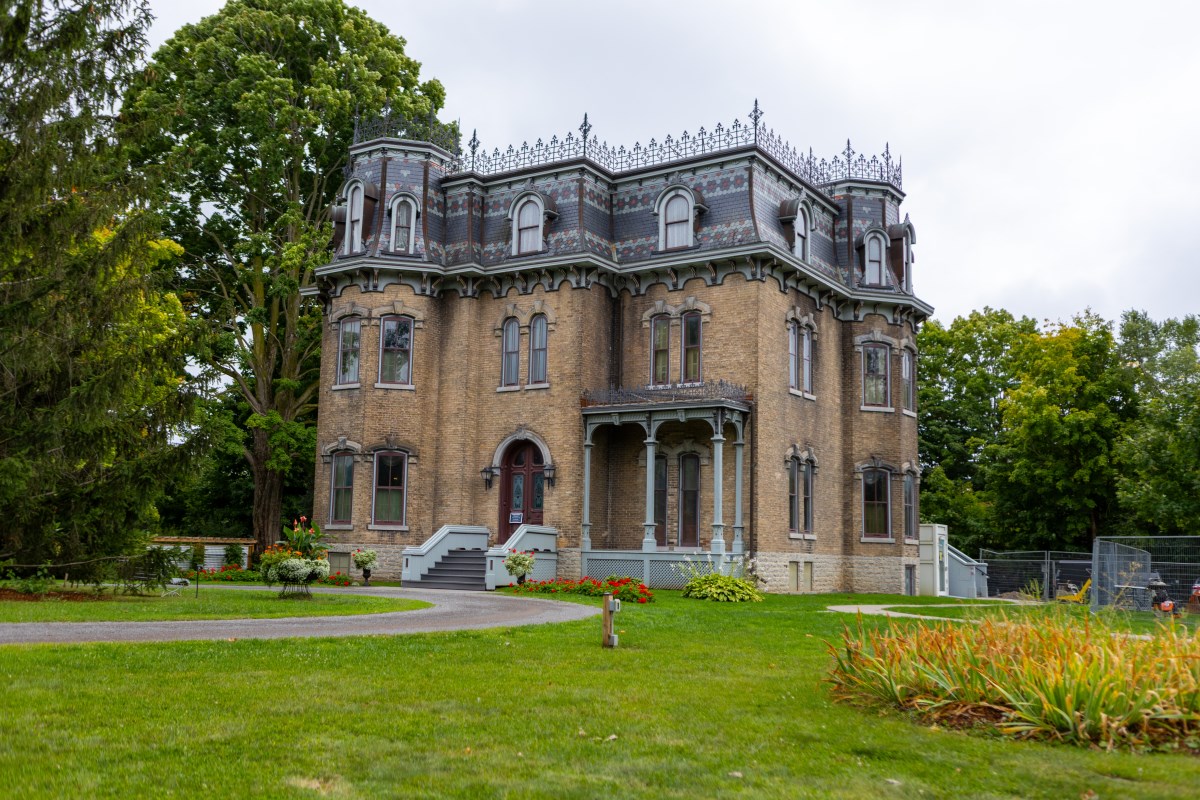
| Example - Glanmore National Historic Site |
|
Glanmore was designated a National Historic Site of Canada in 1969 in recognition of its exceptional Second Empire architecture. The Second Empire architecture was popular in Canada in the 1870s and 1880s. Local architect Thomas Hanley skillfully blended the characteristic Second Empire mansard roof and its ornate dormer windows with asymmetrical massing, a bracketed cornice and iron cresting to create an image of picturesque elegance. The profusion of ornate woodwork and decoration inside the house complement its stately exterior. Built in 1882-1883 for wealthy banker and financier, J.P.C. Phillips, Glanmore reflects the tastes of the well to do in late 19th century Canada |
Historical or Associative Value
The property has historical or associative value because it has direct associations with a theme, event, belief, person, activity or institution that is significant to the community; contributes to the understanding of the community, demonstrates the work or ideas of an architect, artist, builder, designer, of significance to the community.
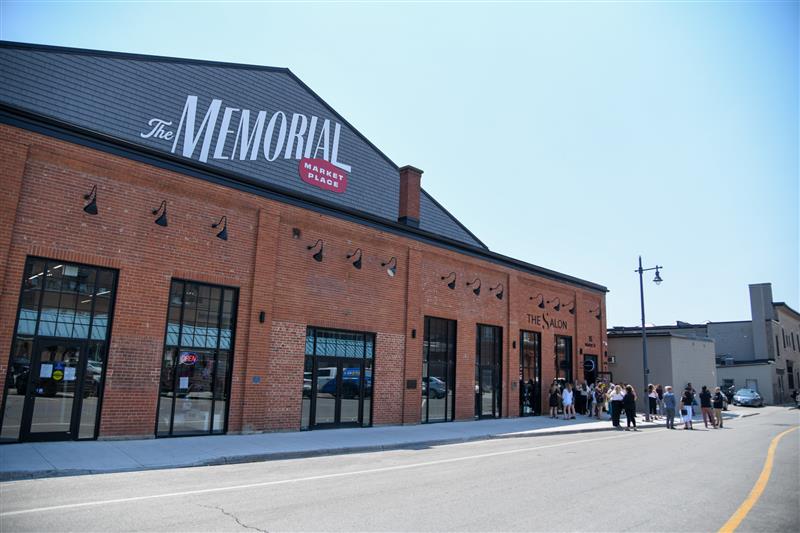
| Example - Memorial Arena |
|
The Memorial Arena at 15 Market Sq. provides a strong example of historical value to the community. The Memorial Arena has played a significant role in Belleville's sports history for over 80 years. Originally called Hume Arena, it was purchased by the City of Belleville in 1946 and renamed the Belleville Memorial Arena to honour war veterans. Constructed as a smaller version of Toronto’s Maple Leaf Gardens, its unique squared corners made playing hockey different than at other rinks. Many great hockey players have skated on its ice including Bobby Hull, Matte Cooke, Brad Richardson and Andrew Shaw. From 1956-61, it was home ice for the Belleville McFarlands, the team that defeated the Soviet Union in 1959 to win the World Championship. The arena was also home to the Quinte Figure Skating Club. It was designated under the Ontario Heritage Act in 2003 by the City of Belleville and remains a time capsule of sports history. |
Contextual Value
The building has contextual value because it is important in defining, maintaining or supporting the character of the area; it is physically, functionally, visually or historically linked to its surroundings or is a landmark.
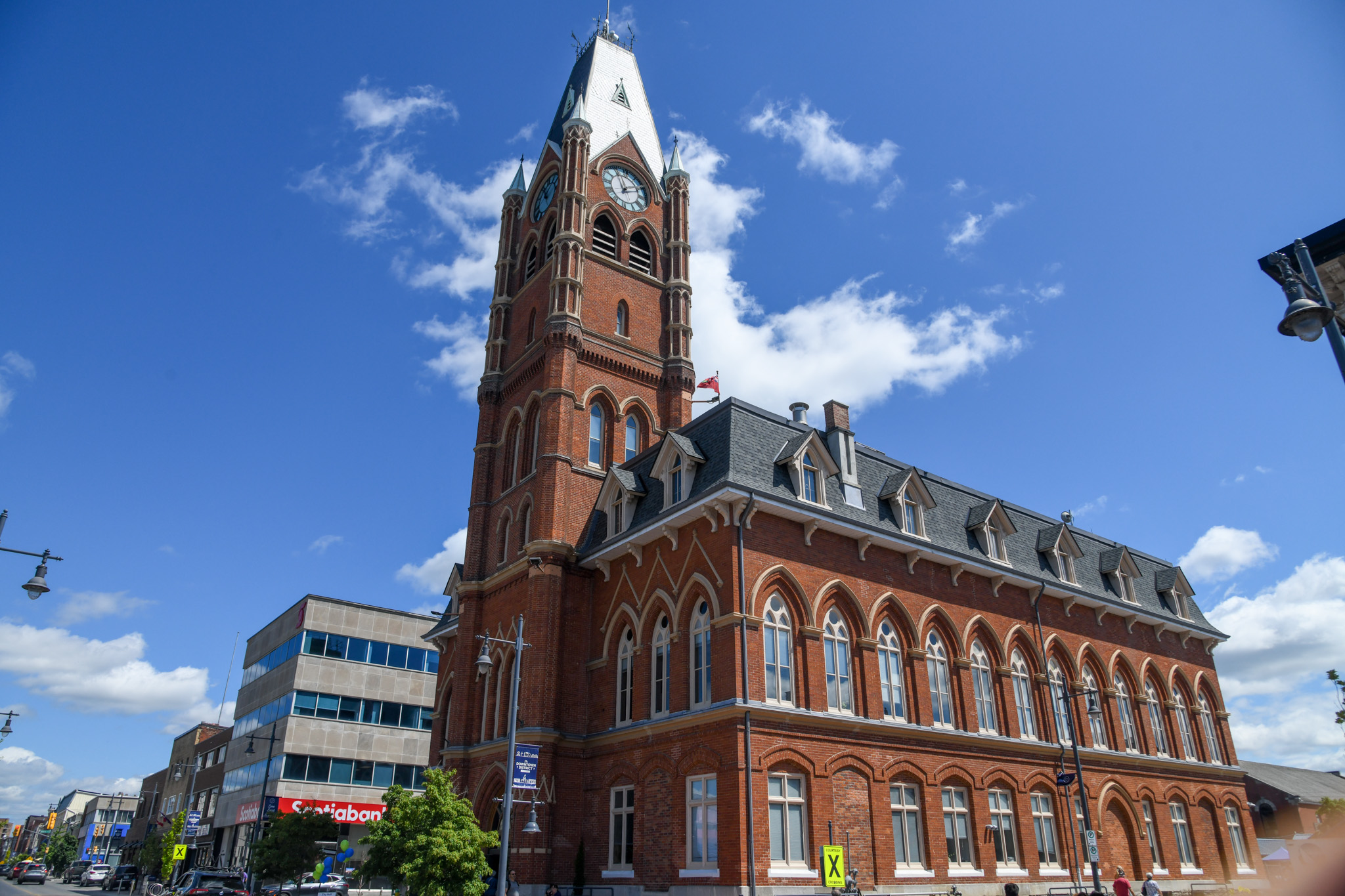
| Example - Belleville City Hall |
|
Built as a symbol of Belleville's growth and prosperity and as an expression of civic pride and confidence in the future, this building was one of a few civic complexes completed during the economic depression of 1873. The building was designed by local architect John D. Evans and built by contractor John Forin. It is one of the very few public buildings of its period designed in the High Victorian Gothic Revival style. A readily identifiable landmark in Belleville, the City Hall forms an integral part of both the commercial streetscape and the city's skyline as viewed from a distance. The building sits as a centrepiece to a grouping of churches, and major public and commercial buildings. In 1979, the Town of Belleville designated City Hall under the Ontario Heritage Act and in 1989, the Ontario Heritage Trust secured a heritage easement on the building. |
Listings on the Heritage Register
Non-designated properties listed on a municipal register are provided interim protection from demolition. An owner of a listed property is required to give municipal council at least 60 days’ notice (in writing) of their intention to demolish or remove a building or structure. The 60-day notice period gives a municipality time to decide whether to begin the designation process.
If your property is currently registered as listed and you would like to designate your property due to its heritage value or are interested in more details, please contact planning@belleville.ca as a first step.
Heritage Conservation Districts
Heritage Conservation Districts can protect and conserve neighbourhoods, rural landscapes, main streets, or other areas of special cultural heritage value that have a cohesive sense of time and place.
Heritage Conservation Districts can include residential, commercial, combination of residential/commercial, institutional, rural areas. They often incorporate natural heritage features such as green open spaces, trees, parkland and waterways. These areas collectively may form a distinct and integrated character that can be conserved through heritage conservation district designation.
The City of Belleville does not currently have a Heritage Conservation District.
Heritage Permits and Approvals
A Heritage Permit is to be approved before any other municipal permits or approvals, including building permits, site plan and minor variances. There are no fees associated with heritage permits. A permit is needed when:
-
You would like to designate or list your property as a heritage property.
-
You will be performing an alteration to a designated heritage property.
-
You are proposing to demolish a designated heritage property.
Completing an Application |
|
1. Complete the Heritage Permit Application Form. 2. Request a pre-consultation meeting with staff to discuss the designation, alternation or development you are proposing. Please reach out to planning@belleville.ca to set up a date and time. Please bring your completed Heritage Permit Application Form to a meeting. In the pre-consultation meeting, depending on the work being proposed staff will inform you of the required supporting documents which may include:
If you are making larger alterations to a designated property, it is recommended that you retain services from an experienced designer/architect/contractor who understands the heritage guidelines. 3. After your pre-consultation meeting and once you have complied all the required documents. Go to the CityView Application Portal to Register and Sign-in. 4. After you sign-in, look for Development Department and click on Apply for Development Application. 5. Choose Heritage Permit as the project type on the online application and fill in the appropriate information. Once you get to the uploads prompt page, please attach the completed Heritage Permit Application Form and any other required documents as discussed in the pre-consultation meeting. |
Additional Heritage Resources
- Belleville Public Library
- Belleville History Alive
- Community Archives of Belleville and Hastings County
- National Trust of Canada
- Architectural Conservancy Ontario
- Community Heritage Ontario
- Ministry of Tourism, Culture and Sport
- Criteria for Determining Cultural Heritage Value or Interest
- Hasting County Historical Society
- Heritage Belleville